Showing posts with label Malabar Spinach. Show all posts

Tuesday, October 9, 2012

Goings and Comings

      Early October is a time of transition for gardens here in Delaware.  While some tomato plants and cukes and peppers are still hanging on, they certainly are not thriving in these shorter days of fall.  There just isn't enough solar power to keep them going.  But as they peter out, the salad greens and cole crops should come into their glory in the cooler temperatures.

Unnamed small cherry tomato still thriving,  October 8,  2012
Even the tomato foliage is still thriving
While some tomatoes may ripen, these plants have given up
Summer flowers still look pretty good, summer veggies fading fast
Pick me and pull me
      Most of the tomatoes that were put out early in May are done, having run out of gas even if they were indeterminate plants.  However, some of the plants that were started from cuttings in June or early July are still looking alright, particularly two Chocolate Cherry plants over at the park.

Still going, and going.....
        The most productive single plant this season was a volunteer squash plant that I hoped might be a white Caspar pumpkin from where it popped up.  So against the advice of garden writers (squash plants are notorious cross breeders), I left it alone.  Turned out to be a true Patty Pan squash, and it produced over 40 squash during the season.  The plant is looking pretty beat up now, though there are still baby squash setting!

Single Patty Pan squash plant,  October 8,  2012
Malabar,  October 8,  2012
      This is the one malabar spinach plant that I put out this summer.  I had started some cuttings last September, and after giving away three starts, this is the single one I had left.  It is a tropical plant, and will melt into a mess with the first frost.  I will be taking some cuttings soon to root for the beginnings of a new crop for next year.  So although this vine looks fine at the moment, its end is soon in sight.
       So as the summer crops are going, the fall crops are coming in stronger and stronger.

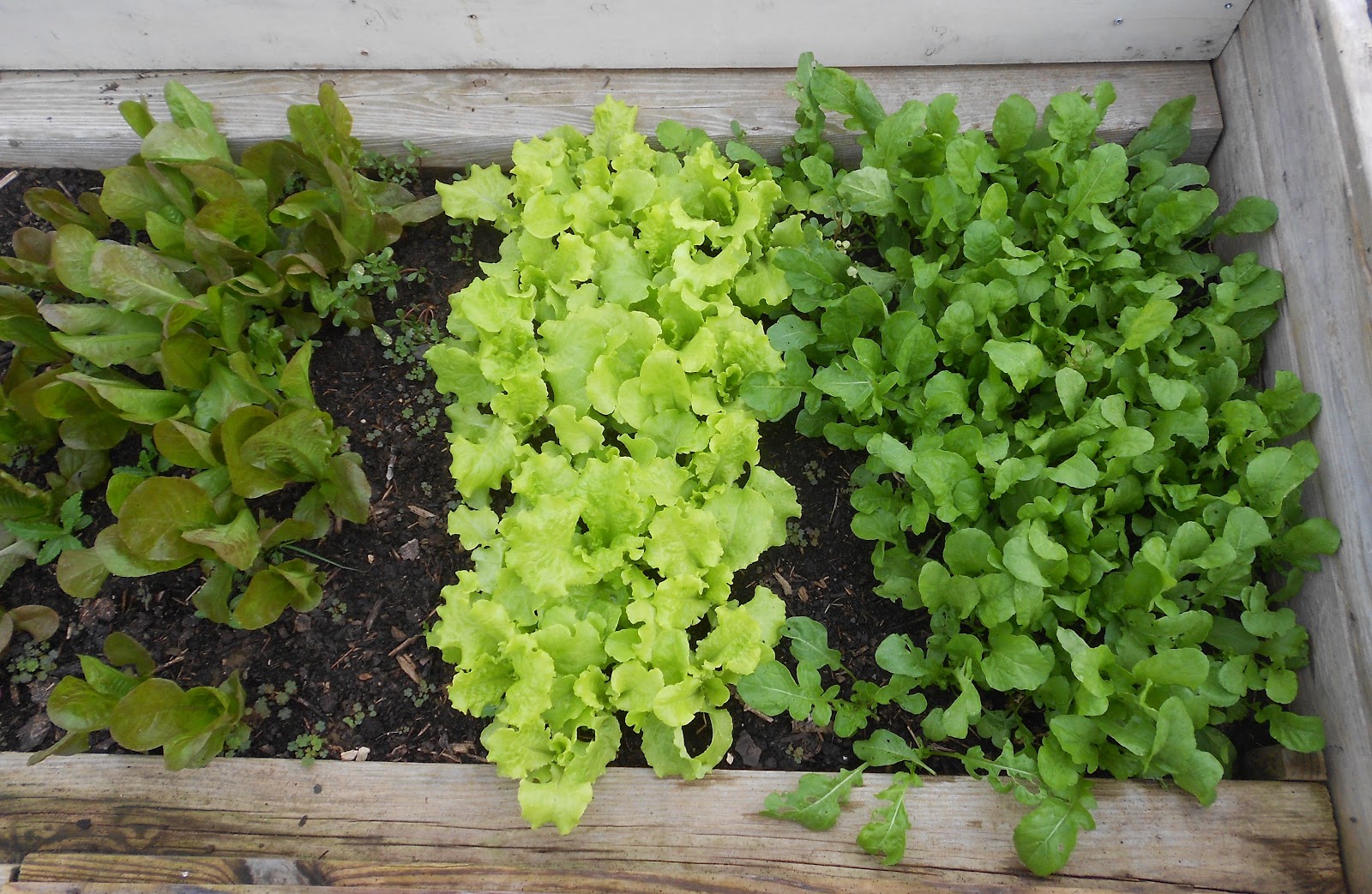
Four Seasons lettuce, Black Seeded Simpson, Arugula
Purple Top Turnip
Fedco Tendergreens, and kale to the right
      The cold frames will soon need to be put back together, and repaired where necessary.  I scavenged wood and glass over the last few months, so I expect there will even be newer and better cold frames in the near future.  I am potting up any volunteers that I find to develop good roots for transplant to one of the many cold frames.
      From one season to the next, with no big pause in sight.

Monday, March 12, 2012

Plant Rescue 102A - Malabar Spinach Update

Malabar Spinach,  3/12/2012
      Early in January, I posted a blog about some malabar spinach cuttings:


Two out of three of the plants from the compost pile rescue rotted at the roots.  Before those plants were completely dead, I had taken cuttings to try to save at least some malabar for planting this year.  Here is a shot of the one lone survivor from the compost pile:

Malabar spinach,  3/12/2012
      This plant never dropped the little flowers it had from last fall, instead they developed into these little seed clumps.  I should pick off these clumps and dry them.  Maybe I have viable seed in addition to the actual vine!


The cuttings shown in the first picture have been growing in this little plastic container.  It works great inverted, as the bottom lets in much more light than the top.  I should wean the cuttings away from such high humidity, as they have obviously rooted.  Here are some other cuttings from 12/6/11 that I have not even potted up yet. So barring some disaster with these young plants, I will have malabar spinach thriving in those hot, humid yucky days of the middle summer.  Who knows, I may even trim up the plant with berries to make some more root cuttings.  At least I would not have to baby them over the winter.

Cuttings still to pot,  3/12/2012

Friday, March 2, 2012

Park Garden Update, 3/1/2012

Arugula overwintered without protection,  3/1/2012
      With it being the first of March, I have a feeling that the worst of winter has to be behind us.  We should have seen the coldest temperatures of the season already.  So hopefully anything that has overwintered so far will make it.  The arugula in the photo above has done well, and it is putting up seed heads.  I want to harvest those seeds, as this plant is obviously quite hardy, and also has a powerfully good taste as well.

Cold frame arugula,  3/1/2012
Garlic and collards,  3/1/2012
Cardoon and baby garlic sprouts in cold frame,  3/1/2012
Overwintered celery and garlic
      These garlic plants are from small cloves that I planted two years ago.  I lost track of them last year, and did not pull the plants when I could see them in June.  They either died back or were just ignored, but now they are doing quite well.  The plants are in clumps of six to eight stalks, where the smaller bulbs from the year before had divided.  So now I have to dig up the clumps and separate them, then replant individual plants on 5 to 6 inch centers.  If I leave them crowded, I will get a bunch of small cloves.

Compost pile volunteers,  3/1/2012
Unprotected Tango lettuce,  3/1/2012
Various cold frame greens,  3/1/2012
Spinach starts under glass,  3/1/2012

Saturday, January 7, 2012

Plant Rescue 102 - Malabar Spinach

Basella alba

From Wikipedia, the free encyclopedia
       Basella alba, or Malabar spinach (also Phooi leaf, Red vine spinach, Creeping spinach, Climbing spinach) is a perennial vine found in the tropics where it is widely used as a leaf vegetable.
       Basella alba grows well under full sunlight in hot, humid climates and in areas lower than 500 m above sea level. Growth is slow in low temperatures resulting in low yields. Flowering is induced during the short-day months of November to February. It grows best in sandy loam soils rich in organic matter with pH ranging from 5.5 to 8.0.
        Typical of leaf vegetables, Malabar spinach is high in vitamin A, vitamin C, iron, and calcium. It is low in calories by volume, but high in protein per calorie. The succulent mucilage is a particularly rich source of soluble fiber. Among many other possibilities, Malabar spinach may be used to thicken soups or stir-fries with garlic and chili peppers.
      Thank you Wikipedia.  So why am I writing about a vine that loves to grow in stinking, hot weather here in early January.  Because it likes to grow in stinking, hot weather.  In the nineties with high humidity, the stuff will grow a foot a day.  When your beautiful lettuce crop is only a figment of your imagination, this stuff is producing lush green leaves that can be eaten raw in a salad, or cooked in various ways.  Unlike New Zealand Spinach which didn't entice (that's being nice) me at all, this stuff is actually quite tasty.  And attractive, especially the Rubra or red stem variety.
      Now for the downside.  Although you can buy the seeds through catalogs, you will hardly ever see them on a seed rack at a nursery.  Ask a sales person about Malabar Spinach and they will give you a blank stare.  I have never seen Malabar as a live starter plant at a nursery.  Last year I talked to another gardener who had Malabar seeds on hand, so I "borrowed" eighteen seeds to plant.  Put them in their cell packs, watered them, talked to them, kept them warm.  Nary a one sprouted.  It has never been easy for me to start.
      So imagine my utter delight last September when I spotted some Rubra Malabar growing on top of one of the compost piles in the park:

Whoopee, Malabar Spinach,  9/7/11
      There were several plants in different places, and yes, I greedily took them all.  But now, how do you keep these heat loving machines alive till next June when they will thrive?  Any which way you can.
      Ah, I have digressed.  Wandered far from my title of Plant Rescue 102.  One of the vines I had pulled from the pile in September did not take well to upheaval, and was rotting at the base by December:

Not looking so well,  12/18/11
Where be his roots?
     So with nothing to do just a week before Christmas (ha, ha), I hacked this failing vine into little pieces, each with a leaf or seed stalk node:


      Having learned my lesson from previous failures with my cloning adventures using garden soil, I was a good boy and purchased a bag of seed starter soil.  And searched the garage for the Rootone that I vaguely remembered from maybe twenty years ago.  Searched the web, found out that the Rootone was probably still good.  So I dabbed it on the cuts, and planted the pieces in the seed starter soil on 12/18/11:

Malabar cuttings,  12/18/11
      Which finally brings us back around to this morning.  The cuttings have rooted well and are starting to sprout.  In the future, I will try to start the cuttings directly in cell packs, to avoid the next step of having to pot these up.  But for this try, I wanted to be able to watch the root development.

New growth,  1/7/12

Great root development, 1/7/12
      So I will pot these this morning, and then try to keep them happy for a few months till it warms up.  Maybe they can go in a cold frame in April.  But so far, a good start to Plant Rescue - Malabar style.


Thursday, September 22, 2011

Fall Vegetable Gardening

      As per usual, a timely start to fall gardening has passed me by, so that I am now in the catch up mode.  It is difficult to get motivated in the hot, muggy and oftentimes miserable days of late August.  Planting seeds of lettuce, broccoli, kale and cabbage just don't make it onto the garden radar.  Which results in a mad scramble in September to try to find veggie starts or figure out what just make it if started from seed.  The cold frames that I intend to get built are the ace in the hole, protecting many of the plants that might be started too late.
      But there was at least one gardener on the ball over at the park.  Lou Gallo.  The robin man from spring posts.  Lou started his patch of Black Seeded Simpson on time.  Please note the infamous robin nesting chair in the background.  The lettuce patch is a beautiful sight to behold:

Lou's Black Seeded Simpson Patch

      Well maybe Lou has slightly overdone it.  A patch 20 feet long by 18 inches across.  I suspect that adds up to more than 10,000 lettuce plants, maybe quite a bit more!  Lou has been very generous to let me trowel some of his few extras out of the bed, giving the remainders just a teeny bit more room to grow.

Lettuce starts

      The green lettuce above are from two small trowel raids I made across Lou's bed, with his blessing of course.  I did give him a couple of tomatoes, his having met the fall reaper.  The red lettuce on the right are volunteers I found atop the park compost pile.  So I kinda fell into those too.

Transplanted to cell packs, taken 9/21/11 

      The small lettuce plants from Lou's garden were transplanted to cell packs to have time to develop a better root system.  Moving them directly to my garden beds results in a very poor survival rate.  The serrated plants in the bottom right corner are kale volunteers from my garden.  They were growing in the paths, so will be transplanted back to the garden.  The taller plants in the upper left corner are Malabar Spinach.  Yep, volunteers from the compost piles at the park.  I will take cuttings from these plants to try to keep all alive in the house over the winter to be transplanted back to the gardens in June.  Malabar Spinach likes it hot, like 90 degree heat.  The more, the merrier.

      I have been driven to searching for volunteers and freebies because I was remiss in starting plants, and the local availability to buy starts is either minimal, or it is expensive to buy starts when found. 

Rose Hill Plantery

      A week ago I had to travel south a bit to babysit, so took the opportunity to visit the Rose Hill Plantery down on Route 9 near the Delaware Memorial Bridge.  Their six packs are $2.99, probably a fair price as I was soon to learn.  They did not have broccoli, as I believe a fellow Bellevue Park gardener bought out their supply.  I did buy one pack of Savoy Cabbage, and one of scotch kale.  A little later I stopped into Willey's Farm Market on Route 13 south of Odessa, where six packs were $3.49.   They had kohlrabi and collards, so I got one of each.  The mesclun was sown pretty heavily, so even at $3.49, I bought one of those.
      It wasn't until the next day that I thought about Olde Country Gardens here in Wilmington.  I scored two four packs of broccoli at $2.99, but careful selection found me a pack of six, and one with seven!  These starts were planted out in both gardens on 9/8/11.  This might be the end of my purchased starters.


Bellevue, Bed #1

      Following Lou's example, I figured I would start some seeds directly into the garden.  Would sew them thickly, hoping to have enough to move to other places, like my daughter's cold frames. Planted so far:

      9/12/11 Bed #8: One row White Globe Radish, one row Easter Egg Radish, 4 rows Purple Top Turnips

      9/19/11 Bed #5, from East to West: Planted in 6 or 8 inch swaths: Fedco Tatsoi, Livingston Arugula, Lake Valley Mizuna, and Bloomsdale long standing spinach.

      9/20/11 Bed #1 pictured above, in 8 inch swaths from East to West: Fedco Space spinach, Fedco thick stem Chinese mustard, Fedco Beedy's kale, Fedco giant winter spinach, Heirloom early wonder beet, Livingstone white globe radish, and GWD pak choi

      9/21/11 Bed #6 from East to West: two foot block GWD 2011 Arugula, then 8 inch swaths of Fedco winter marvel bibb lettuce, Fedco Rouge D'Hivre romaine lettuce, Livingsone baby romaine, GWD 2011 red sails lettuce, Fedco tango lettuce, GWD 2011 four seasons lettuce, and Phil's 2011 Lush Arugula

Wednesday, September 7, 2011

Volunteer Veggies

      This fall, like many, came too quickly, with many summer projects left undone.  Not surprisingly, planting seed for the fall garden was one of those projects gone awry.  To make it worse, none of the nurseries or box stores around here are carrying fall veggie starts.  In little more than an hour, I will drive down to Willey's Farmstore to see what they have.  But this morning I was over to the park garden to look for volunteers in my plot and in the three compost piles.
      The pickings were fairly slim.  Black Seeded Simpson lettuce that I got from Lou Gallo early this year was great fresh, then went to seed.  Some of the babies are just poking through the mulch.

Black Seeded Simpson starts, 9/7/11

      I saw Lou this morning over at the park.  He has a fat 20 foot row of Simpson coming up right now.  He offered me to thin out some.  Solves that problem.  Thank you Lou.  I forgot to take a photo of the nice little Frisee plants coming up at the park.  They look like I had put them in, as they are already in a bed, no transplanting required!  There is a nice batch of what looks to be Rainbow Lacinto Kale coming up.  It could also be Red Russian Kale, but no problem as either is great.

Kale, either Red Russian or Rainbow Lacinto

      Next it was on to a walk around the park compost piles to see if anything of interest was growing for transplant to my garden.  Whoopee, spotted at the top of one pile was a sole sprout of the red stemmed Malabar Spinach!  I had tried unsuccessfully to grow malabar from seed this spring, having planted 18 seeds to have only one sprout.  That one did not make it to size either. 

Malabar Spinach find, 9/7/11

      Malabar Spinach likes hot weather, as in the nineties.  It will not get that here in September, but it will grow to where I can get lots of cuttings.  I have at times successfully rooted them over the winter, to have plants to put in the ground in June.  I will try harder this winter to succeed with it, as it is difficult to even find the seed.
      Having scaled the compost pile to dig out the Malabar, I was rewarded with a bonus!

Red lettuce, 9/7/11

      A handful of red lettuce seedlings!  Oh how sweet it is.  I would not have even seen them at the top of the pile if it had not been for the malabar scavenge.  The lettuce was transplanted to cell packs to grow some better roots before going into their fall spots.  A total count of 11 nice little seedlings.  I love it when a plan comes together.  So between Lou's generous offer and my red lettuce find, I may not buy lettuce later this morning.  More to spend on broccoli and cabbage.